An Artistic and Academic Exploration of the Interface between Theology and the Arts
The Artistic Theology Lab aims to create an inspiring ecology where religious, academic, and artistic communities meet. The Lab is a place to explore the relationship between theology and the arts, especially between dance, ritual, and mysticism. It is interested in the role of contemporary (choreographic) art practices as locus theologicus. By recognizing the theological value of the arts and providing artists with a rich religious vocabulary and imagination, the Lab aims to initiate co-creative and interdisciplinary projects at a local and international level.
Kunnen de natuur en haar nakomelingen ondeugend zijn? In een tijdperk waar het klimaat ons voortdurend confronteert met onze menselijke tekortkomingen, versplintert de populaire utopie van een maakbare toekomst. Is de natuur dan onontkomelijk de antagonist in onze droomwereld? Wat is het kwaad in dit verhaal? Is de natuur een boze stiefmoeder, een verleidelijke femme fatale, of een wijze grootmoeder? Is de enige manier om te overleven, leven als haar ondeugende kinderen? Hoe leert een mens de kunst van de metamorfose? Om zo opnieuw een plaats te vinden tussen insecten, bomen, mossen en regendruppels.
Dit choreografisch en mythopoetisch project onderzoekt de vormelijke en ontvormende vereisten die een initiatie in deze eco-cultus afdwingt. De dans gaat voorbij aan de historisch kunst van de mimesis door de integratie van extatische technieken zoals compostering en fotosynthese in het menselijke lichaam; door samen met alle organismen een lofzang uit te voeren voor de natuur waar elk zowel toeschouwer als performer is.
Het project wordt uitgevoerd in verschillende fases in de loop vaan artistieke residentie in KADOC (KU Leuven) tijdens hun tentoonstelling In Extase .
Observatie – Intoxicatie – Resonantie
Abstract (EN)
Can nature and her offspring be mischievous? In a time when the climate is constantly confronting us with our human shortcomings, the popular utopia of a moldable future is shattered. Is nature inevitably the antagonist in our dream world? What/who is evil in this story? Is nature an evil stepmother, a seductive femme fatale, or a wise grandmother? Is there a way out? To survive, to live like her naughty children? How does a person learn the art of metamorphosis? In order to once again find a place among insects, trees, mosses and raindrops.
This choreographic and mythopoetic project investigates the formal and deforming requirements that an initiation into this eco-cult entails. The dance goes beyond the historical art of mimesis by integrating ecstatic techniques such as composting and photosynthesis into the human body; by performing a hymn for nature, together with all organisms, where everyone is both spectator and performer.
Hemellichamen
28 mei Sint-Baafskathedraal Gent
29 mei Sint-Michiels & Sint-Goedelekathedraal Brussel
1 juni Sint-Michielskerk Roeselare
4 juni Quintinuskerk Zonhoven
In de volle leegte spint het lichaam een rode draad doorheen de Hemelvaart die voorzichtig zoekt en schatten vindt; stormen trotseert en zware zorgen overboord gooit.
De dans ritualiseert het rouwproces terwijl het lichaam de geliefde aarde loslaat en het onbekende binnentreedt.
(NL)
Hemelvaart wordt vaak verbeeld als een glorieuze opgang, een heugelijk thuiskomen. Zielsgelukkig leven in eeuwigheid, wat betekent dat voor een menselijk lichaam dat geboren is uit het stof van de aarde en in de vergankelijkheid van de tijd? Welke metamorfoses heeft de hemelvaart in petto voor een lichaam in een staat van flux tussen sterven en leven. Hoe pijnlijk kan verheerlijking zijn wanneer hemels thuiskomen ook een proces van verlies en rouw inhoudt?
De dans geeft stem aan het lichaam dat vaak over het hoofd wordt gezien in dit tafereel. In dans staat de metamorfose centraal, een constante interactie tussen vormen en verschuivingen van betekenissen. Het dansend lichaam vertelt een eigen verhaal, een verhaal doordrongen van aarde en bloed, een mythe die de taal overstijgt en soms met verstomming slaat. Waardevol zijn deze stiltes voor zij die luisteren naar het hartritme van de geschiedenis, de klaagzang van de aarde, het liefdeslied dat de schepping zingt voor de hemelingen. In de volle leegte spint het lichaam een rode draad doorheen de Hemelvaart die voorzichtig zoekt en schatten vindt; stormen trotseert en zware zorgen overboord gooit.
De performance is een dansritueel dat in gesprek gaat met het repertoire van de katholieke liturgie en de orgelmuziek van Olivier Messiaen. Het verbeeldt de stilte tussen de verzen waar het lichaam spreekt. De dans ritualiseert het rouwproces terwijl het lichaam de geliefde aarde loslaat en het onbekende binnentreedt.
(EN)
The Ascension is often depicted as a glorious ascent, a joyful coming home. A blissful eternal life, what does that mean for a human body that is born from the dust of the earth and in the transience of time? What metamorphoses does the Ascension have in store for a body in a state of flux between life and death. How painful can glorification be when heavenly homecoming also involves a process of loss and mourning?
Dance gives a voice to the body that is often overlooked. Metamorphosis is central in dance, a constant interaction between forms and transformation of meaning. The dancing body tells its own story, a story imbued with earth and blood, a myth that transcends language and stuns our perception. Precious are these silences for those who listen to the heart rhythm of history, the lament of the earth, the love songs that creation sings to the heavens. In this silent fullness, the body weaves a thread in the tapestry of the Ascension, carefully searching and treasure finding, braving storms and throwing heavy burdens overboard.
The performance is a dance ritual that enters into conversation with the repertoire of Catholic liturgy and the organ music of Olivier Messiaen. It represents the silence between the verses where the body speaks. The dance ritualizes grief and loss as the body lets go of the beloved earth and enters the unknown.
Artistieke leiding: Sander Vloebergs
Dansers : Sander Vloebergs, Katrien Vanderbeke, Lu Marivoet, Timur Magomedgadzhiev
Zang: Laura Zutterman
Orgel: Nicolas De Troyer, Momoyo Kokubu
Sophia : Frankfurt 10/24
“I was there when He set the heavens in place, when he marked out the horizon on the face of the deep. I was there when he commanded the water with His Word and laid the foundations of the earth. I was there, his beloved “, proclaims Sophia.
“I was there when He set the heavens in place, when he marked out the horizon on the face of the deep. I was there when he commanded the water with His Word and laid the foundations of the earth. I was there, his beloved “, proclaims Sophia.
Who is this mysterious Sophia, this feminine Wisdom? Since time immemorial, she lingered, wandering the earth, barely remembered by human beings. Driven by their will to rationalize and to dominate creation, they exchanged her love for power and intellect. This liturgical performance initiates a quest, a hero’s journey, to re(dis)cover Sophia. The dance unfolds during the Service of the Word and explores a ritualistic and theatrical landscape to uncover hidden knowledge, stored in our bones and veins. The climatic encounter between masculine Logos and feminine Sophia transforms the Sermon into a moment of mystical union; the Eucharistic Sacrifice into a journey home.
Via dance, theater and live music, we flirt with feminine aspects of myths and rituals which remained dormant in the Catholic liturgy, waiting for Sophia to re-emerge.
We dalen af naar de onderwereld waar kleurrijke beelden woelen onder de vochtige aarde van de alledaagse realiteit”
Night of Creation is een dansvoorstelling en een nachtelijk getijdengebed. Onder de begeleiding van een gregoriaans koor, gebeden, live muziek en een soundscape en geholpen door videobeelden en textielinstallaties gaan drie dansers op zoek naar een nieuwe hymne voor de schepping.
Dag en nacht, licht en donker, het zijn tegenstellingen die het christendom en zijn scheppingsmythen sterk hebben gekleurd. Meer nog, de westerse cultuur is doordrongen van een beeldtaal die het licht en het woord verkiest boven het duister en de materie. Het Woord was immers bij God. Overdag bracht Hij via onderscheid structuur aan in de schepping en op de zesde dag duidde hij de mens aan als Zijn hoeder. De huidige ecologische crisis wordt gezien als het gevolg van zo’n antropocentrische en logocentrische kijk op de natuur. In het licht van de westerse rationaliteit werd de aarde bestudeerd, bestuurd en bestookt. Vandaag leren we te luisteren naar de verschillende stemmen die tijdens de nacht hun eigen verhalen vertellen over Moeder Aarde.
Deze choreografie is een structuur die verwarring brengt: die het onderscheid tussen het christelijk getijdengebed (de heiliging van de dagen), natuurrituelen, dans, en de menselijke verbeelding verduistert. We dalen af naar de onderwereld waar kleurrijke beelden woelen onder de vochtige aarde van de alledaagse realiteit. Zoals sjamanen gaan we op zoek naar nieuwe en persoonlijke manieren om onze ontstaansmythen te ontrafelen en de schepping te heiligen. We vragen ons af:
Wat wordt er gecreëerd tijdens de zes onbenoemde nachten van de schepping?
O magnificent multicolored vision, kaleidoscopic lens of Nature’s creative potential,
Reveal to us the splendid expansion of splintered eternity which you nurture in all grains of sand and all shades of heavenly grace. Move us through endless nocturnal landscapes, spiraling through time as creation’s voices echo the sound of galactic bliss.
On the colorful rhythm of blossoming patterns we praise you with dance. Through ancient storytelling we harvest the fruits of myths that guide us through a starlit night. We follow the veins of blood that drench the earth with your living water and dive into the primordial waters of chaos to gaze into your bottomless eyes. We travel at lightspeed through darkness and embrace the soil of your moist body. With the plants we kiss the sky, with the animals we sing your hymns. A photosynthesis of Creation.
The choreography is structured around the catholic liturgy of the hours. The central theme is a hymn of/for nature, inspired by shamanic journeying and rituals. We celebrate the life-giving heartbeat of the earth that accompanies creation from night to day.
With the plants we kiss the sky, with the animals we sing your hymns. A photosynthesis of Creation.
Artistieke leiding en choreografie: Sander Vloebergs
Dansers: Sander Vloebergs, Katrien Vanderbeke, Lu Marivoet
BLue : Lament for the Sea – 11th of November, London
A hybrid long verse narrative by Liz MacWhirter, with choreography by Sander Vloebergs
Video by Jonathan Kearney
Seachd bleadhna mantig a’m breath
Thig tuil far Eirin re nao tra
’S far Ila ghorim-ghlas laodhaich
Seolaidh I Cholum chlerich.
Seven years before the Judgement comes
a flood shall overflow Ireland for nine tides
and the blue-green pleasant Islay
but learned Columba’s little isle will sail.
In the genre of apocalyptic verse, a thousand years ago, a Scottish Gaelic prophecy foretold a flood at the end of time from which the Isle of Iona shall arise. The prophecy gained mythic status in the Middle Ages. At least fifty kings from Scotland, Ireland and Norway were buried in Reilig Orain, a graveyard beside the monastery founded by the Irish monk who brought Christianity to mainland Britain. Pilgrims followed and many stayed in the Augustinian nunnery, close to the beach. The myth of Iona arising and escaping flooding seas has been largely forgotten today.
Strangely, according to geologists, Iona was formed as the earth’s crust was forced up to the surface almost three billion years ago when three continents collided. It is Precambrian, that is pre-fossil. My poem honours the connectedness of this deep time, my Gaelic ancestors, and the millennia of faith held in this place.
Text by Liz MacWhirter
Heart Space : 23th of November, St Walburgis Antwerp
Heart Space is een liturgische performance die via dans en beweging ruimte schept voor heling. Geleid door de dans bouwen wij – publiek en performers – samen aan een veilige ruimte. We bewegen via de liturgie doorheen momenten van pijn en verzet en gaan op zoek naar hartwarmte onder de koude kerkstenen. De kilte heeft niet het laatste woord. Warme tranen en tijdloze blikken kruisen elkaar. Antwoorden zijn er niet. Langzaamaan ontkiemt het lichaam, bedolven onder heilige grond. De geboorte van een nieuwe dans die verhalen verbindt.
De performance “Heart Space” wordt deze keer opgevoerd in een periode waarin pijn en trauma opnieuw aan de oppervlakte komen. Kerk en maatschappij worden verwacht kleur te bekennen en worden gevraagd om antwoorden te geven om de pijn uit het verleden te verzachten. “Heart Space” ging in première in Leuven op 30 maart, in samenwerking met theologe Marianne Servaes die eerlijk getuigde op basis van haar eigen levensverhaal. Ze werd diep gekwetst door de kerk maar bleef zoeken naar manieren om deze gebroken relatie te helen. “Heart Space” wil ruimte scheppen om dit proces een kans te geven. Het dansritueel creëert een volledig nieuwe omgeving waar ook de Kerk haar wonden kan likken en op zoek kan gaan naar haar eigen hartwarmte die gloeit aan de oorsprong van haar verhaal.
Heart Space wordt opgevoerd door vijf performers: twee dansers, een woordkunstenaar, een theologe/zangeres en een priester. Ze vertolken verschillende verhaallijnen die in deze ruimte samenkomen – niet op een kruispunt, maar in een cirkel: er is ruimte voor verzet, voor adem, voor contact en afstand, voor beweging. In vijf hoofdstukken worden situaties gecreëerd waarin gezocht wordt naar warmte, naar veilige bouwstenen van onze “heart space”. De confrontatie is een motivatie tot transformatie, ontdooien en loskomen. Soms staan we op, maar niet altijd. Sommige wonden worden gezalfd, anderen bloeden. Hun tijd is nog niet gekomen. Op het ritme van het ritueel helen we eerlijk, zonder richting of dwang. De hybride ruimte van de performance-liturgie geeft ons de vrijheid om te spreken vanuit het hart en te bewegen uit onze beenderen – om ook niet akkoord te gaan. Een liturgie zonder amen maar met adem. En wanneer de laatste adem onze “heart space” verlaat, luisteren we.
De verschillende onderdelen van de choreografische vertelling kunnen gelezen worden als de verschillende facetten van een persoon die trauma en misbruik heeft doorleefd. Onze intentie is niet om standpunten aan te nemen of te oordelen. Op basis van verschillende archetypische verhalen tasten we af waar er mogelijkheden ontstaan om te groeien en te verbinden. We gebruiken de mechaniek van verhalen vertellen in dialoog met de structuur van een klassieke eucharistie. Deze misviering ziet er dan ook radicaal anders uit en geeft een nieuw gezicht aan een verstilde en gewonde Kerk.
We nodigen onze deelnemers uit om voor de performance met ons te praten rond de tafel. We maken kennis en geven informatie over het dansritueel voor zij die graag met enkele handvaten onze cirkel betreden. Wie graag mee fysiek opwarmt met de performers, kan iets vroeger komen. We vragen daarom om voor de performance contact op te nemen met ons, opdat we alle participanten zo goed mogelijk zouden kunnen begeleiden. Na de performance houden we een praatcirkel waar ervaringen van de performance gedeeld kunnen worden en waar een open gesprek kan plaatsvinden op basis van het thema van de voorstelling. Deelnemen is vrijblijvend en je kan er ook voor kiezen om het geheel vanop afstand te volgen (en buiten te gaan wanneer nodig).
Programma:
Fysieke opwarming van de performers: 19u
Kennismaking rond de tafel: 19.30u
Performance : 20-21u
Nagesprek en deelcirkel: 21-22u
Choreografie: Sander Vloebergs; Dans: Katrien Vanderbeke en Sander Vloebergs, Woord: Pierrette COffrée, Priester: Ronald Sledsens, Zang : Xenia Geysemans
The Magdalene project – the 18th of January 2024, Drongen
De vernieuwde versie na “Tranenbruggen”, Magdalenakerk brugge
(NL)
Maria Magdalena is een boegbeeld van berouw en vergeving. Deze vrouw is de geschiedenisboeken ingegaan als zondares en profetes, prostitue en apostel. Vol overgave werpt ze haar blik neer en reikt ze met haar tranende ogen naar de voeten van haar Verezen Heer. Sindsdien beweegt ze verheven in de marges, verleidelijk vleiend tussen de versregels van het verleden. Wie is deze Magedalena-figuur die zo charmant haar gelaat verandert voor haar aanbidders?
De dans keert terug naar de wortels van haar verhaal en geeft stem aan haar keuzes. In beweging vergleiden haar en mijn wezen en schreeuwt haar (be)rouw doorheen mijn lichaam. Een koor van onuitgesproken woorden weerklinkt als klaagzang van duizenden vrouwen. Ze bewenen de vergetelheid. Nu niet meer. Nooit meer.
“Vergeef ons onze zorgen, Maria Magdalena”
(EN)
Mary Magdalene is a figurehead of repentance and forgiveness. This woman has gone down in history as a sinner and prophetess, prostitute and apostle. Devotionally, she casts down her gaze down and reaches with her teary eyes towards the feet of her Lord. Ever-since she has moved loftily into the margins, seductively flattering, between the verses of the past. Who is this Magedalena figure who so charmingly changes her countenance for her admirers? The dance returns to the roots of her story and gives voice to her choices. In motion, her and my being aline, her grief screaming through my veins. A chorus of unspoken words echo like the lamentation of thousands women. They moan oblivion. Not anymore. Never again.
Release Video van performance Rijkevorsel 26 maart 2022
De wolf weerspiegelt bevreesde blikken. Zijn grimmige schijn-heiligheid werpt een schaduw over de stad. Wanneer de nacht valt, staat de held op. Gewapend met wonden betreedt hij het heiligdom van het beestenrijk.
Deze performance is een dansante vertelling van de legende over Franciscus van Assisi en de Wolf van Gubbio. Het verhaal gaat over de mythische ontmoeting tussen de twee hoofdrolspelers en over de transformatie van angst naar liefde. De performance speelt in op de eigenheid van mythologische vertellingen en het weefgetouw van archetypische beeldtaal en onderzoekt hoe innerlijke bewegingen kunnen worden vormgeven en gedeeld met een publiek.
More info about this project, click here
De Wolf van Gubbio (selection of acts) – BAC Atelier Leuven 30 maart 2022
Ter gelegenheid van de open ateliers van KU Leuvens BAC Atelier, brengen we 3 acts, 3 hoofdstukken, uit onze dansante vertelling “De wolf van Gubbio”. Deze fragmenten worden geïsoleerd en gepresenteerd als danssolo’s van ongeveer 10 minuten. Kan de taal van de dans voldoen aan de vereisten van een narratieve cultuur? Welke vormelijke en inhoudelijke ingrepen moet dans ondergaan opdat hij een balans kan behouden tussen mimesis en abstractie, taal en mystieke ervaring?
To consult the full program, click here
Opus Corporis: a liturgical body work project – Antwerp 2024 (coming soon)
allerheiligenkirche Frankfurt 29th of May 2022 (premiere)
Eucharist = Performance. We explore the implications of this equation with special attention to the notion of “participation”, a popular term in both performance art and religious ritual. Respecting the eucharistic form, we implement theatrical and choreographic interventions to explore the audience response and improve the performative and sacramental value of the event.
The premise of this performance is the radical equation between the Eucharist and performance art. On two Sunday celebrations and two evening performances, we want to explore the implications of this equation with special attention to the notion of “participation”, a term that rose in popularity in both liturgical and artistic discourse over the past decades. Respecting the eucharistic form and its procedures, we will implement theatrical and choreographic interventions in collaboration with the church community and the celebrating priest to study the audience response and improve the performative and sacramental value of the event.
This project will result in 4 performances and a research project focusing on the state of the art of liturgical dance, its new perspectives and the documentation of the liturgical experiment performed in this project.
BAC ART LAB Leuven, Vital Decosterstraat 102, 3000 Leuven, België
(NL)
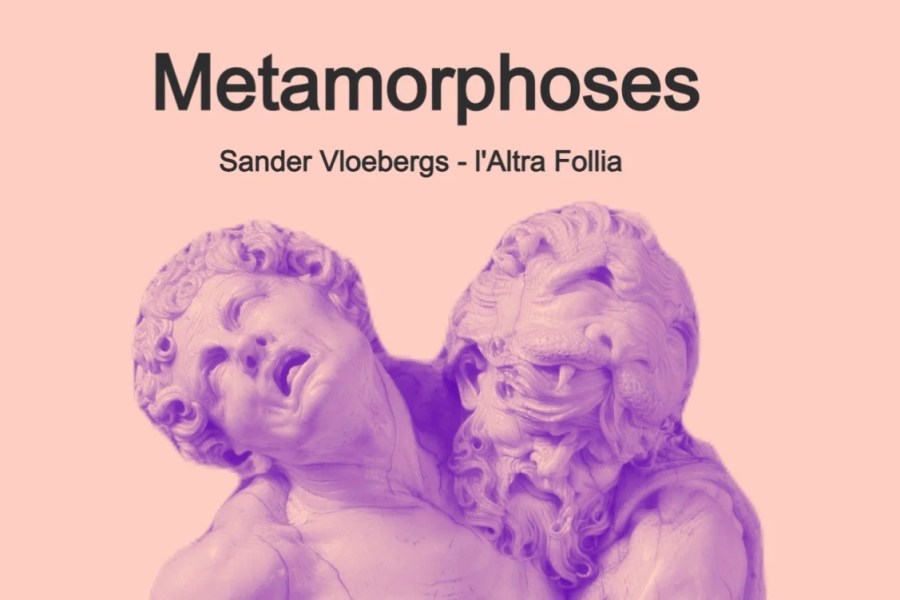
Dit dansant performanceproject over transformatie en verbeelding is gebaseerd op klassieker Metamorphoseon libri van de Romeinse schrijver Ovidius. De dichter documenteert de constante processen van verandering die plaatsvinden doorheen het menselijke bestaan, en in het bijzonder waar deze gegenereerd worden door het goddelijke. Het ontstaan van de mens is geworteld in een bodemloze oceaan, een wervelende natuur en bovennatuur. Ook vandaag worden mensen overweldigd door een constante stroom van prikkels waardoor men soms het Noorden kwijtraakt. Dit project zoomt in op het lichaam als kompas in een veranderende wereld. Het lichaam heeft een eigen tijdelijkheid die verandering genereert maar ook vertraagt en verwerkt.
Via dans en haar dialoog met muzikale verkenningen, zoeken wij naar lichamen die transformeren en verstillen. We inspireren ons op eeuwenoude en tijdloze beelden en verhalen die onze cultuur doordringen. Beelden en de verbeelding vervullen een cruciale rol in deze transformatieprocessen. Ze ontstaan bij verandering en geven veranderingen richting. Lichamen spelen met beelden die door hun ledematen razen. Door deze beelden zichtbaar en hoorbaar te maken verkennen wij de poorten tussen binnen-en buitenwereld en de processen van verandering en verstilling.
(EN)
This dance performance project about transformation and imagination is based on the classic Metamorphoseon libri by the Roman writer Ovid. The poet documents the constant processes of change that take place throughout human existence, and especially where they are generated by the divine. The origin of man is rooted in a bottomless ocean, a swirling nature and supernature. Even today, people are overwhelmed by a constant flow of stimuli that sometimes causes them to lose the North. This project zooms in on the body as a compass in a changing world. The body has its own temporality that generates change but also delays and processes it.
Through dance and its dialogue with musical explorations, we search for bodies that transform and quieten. We draw inspiration from age-old and timeless images and stories that permeate our culture. Images and the imagination play a crucial role in these transformation processes. They arise with change and give direction to change. Bodies play with images racing through their limbs. By making these images visible and audible, we explore the gateways between the inner and outer world and the processes of change and stillness.
Met 2 toonmomenten delen we jullie graag het eerste resultaat van ons onderzoekproces in samenwerking met danser en choreograaf Sander Vloebergs. De bedoeling is dat we dit project verder uitwerken op lange termijn.
OPGELET: er zijn telkens maar 25 plaatsen beschikbaar per toonmoment.
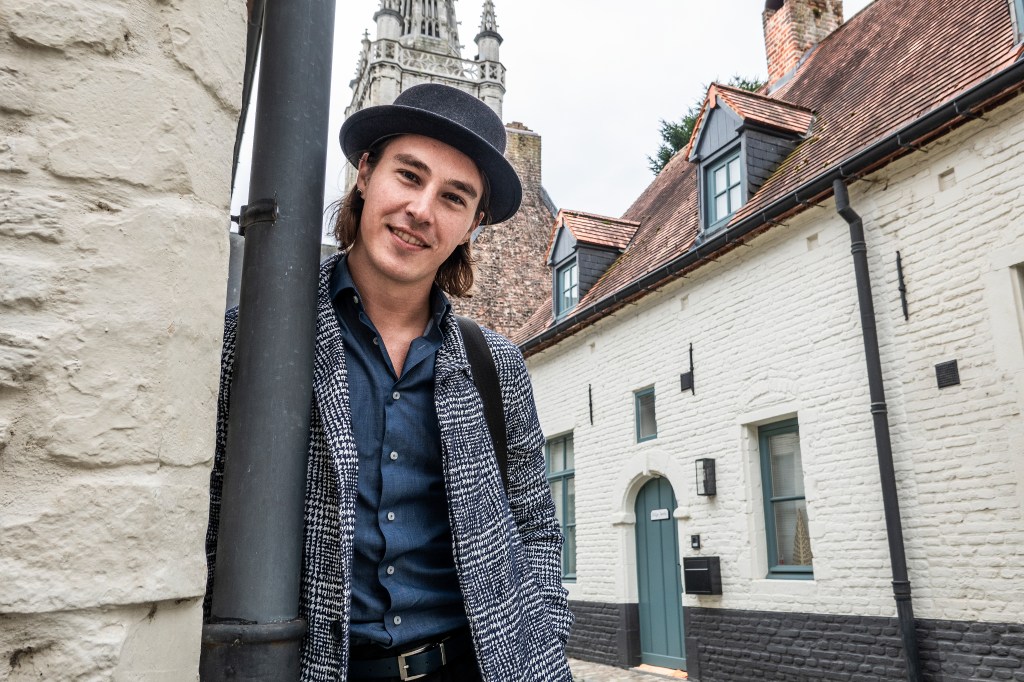
Sander Vloebergs obtained a PhD in Theology (KULeuven) and Literature (UAntwerpen). He is a choreographer and multimedia artist and the founder of the Artistic Theology Lab. He is currently a postdoctoral researcher at the KU Leuven (funded by FWO) and guest lecturer at the LUCA School of Arts where he teaches medieval art history.
The Artistic Theology Lab is founded by theologian – artist Sander Vloebergs. It aims to create an inspiring ecology where religious, academic and artistic communities can meet. The Lab is a place to explore the relationship between theology and the arts, especially between dance, ritual, and mysticism.
This academic and religious art project proposes a collaboration between artists, religious institutions, and academics. Using practice-as-research methodologies, the lab produces art works and academic reflections that aim to innovate the fields of theology and artistic research. This practice generates a network of people. The Lab’s projects, supervised by Sander, represent concrete encounters between stakeholders that belong to the three different communities.












 Artistic Theology Lab